
크레스티드게코 케어시트를 만들었습니다.
크레스티드게코 집사님들께서 많은 조언을 해주시면 감사하겠습니다 ^^
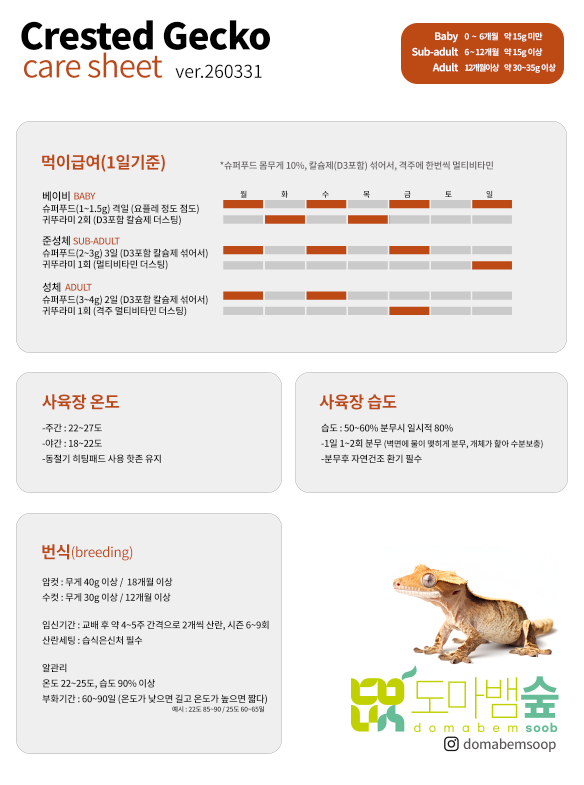
크레스티드 게코 키우기 — 먹이·온도·습도·번식까지 한 장으로 정리 (Care Sheet ver.260331)
크레스티드 게코 키우기, 어디서부터 시작해야 할지 막막하신가요? 처음 데려오면, 혹은 이미 키우고 있더라도 “이게 맞나?” 하고 한 번쯤 불안해지는 순간이 찾아옵니다. 먹이는 얼마나 줘야 하는지, 온도는 몇 도가 적당한지, 번식은 언제부터 가능한지. 이 글에서는 크레스티드 게코 사육에 필요한 핵심 정보를 성장 단계별로 정리했습니다.
성장 단계 구분
크레스티드 게코의 사육 방법은 성장 단계에 따라 달라집니다. 일반적으로 세 단계로 나눕니다.
- 베이비(Baby): 0~6개월, 약 15g 미만
- 서브어덜트(Sub-adult): 6~12개월, 약 15g 이상
- 어덜트(Adult): 12개월 이상, 약 30~35g 이상
체중은 개체마다 차이가 있으므로 월령과 체중을 함께 보고 판단하시는 것이 좋습니다.
먹이 급여 (1일 기준)
크레스티드 게코의 주식은 슈퍼푸드(파우더 사료)입니다. 슈퍼푸드는 물무게 10%의 칼슘제(D3 포함)를 섞어서 급여하며, 격주에 한 번씩 멀티비타민도 함께 더스팅합니다.
베이비 (Baby)
슈퍼푸드를 매일 급여합니다. 양은 1~1.5g 정도이며, 오플레 정도의 점도로 개어줍니다. 귀뚜라미는 2일에 1회, D3 포함 칼슘제를 더스팅해서 제공합니다.
서브어덜트 (Sub-adult)
슈퍼푸드는 3일에 1회로 줄입니다. 양은 2~3g 정도이며, D3 포함 칼슘제를 섞어줍니다. 귀뚜라미는 1회, 멀티비타민을 더스팅해서 급여합니다.
어덜트 (Adult)
슈퍼푸드는 2일에 1회, 3~4g 정도 급여하며 D3 포함 칼슘제를 섞습니다. 귀뚜라미는 격주 1회, 멀티비타민 더스팅으로 제공합니다.
급여 팁: 슈퍼푸드의 농도와 양은 개체 반응을 보면서 조절하시면 됩니다. 먹이 접시에 남은 양을 확인하는 습관이 중요합니다.
사육장 온도
크레스티드 게코는 열대 지역 출신이지만 고온에 약한 편입니다. 적정 온도를 꼭 지켜주셔야 합니다.
- 주간: 22~27도
- 야간: 18~22도
- 동절기: 히팅패드를 사용해 핫존을 유지합니다
30도 이상의 고온은 치명적일 수 있으므로 여름철 온도 관리에 특히 주의하셔야 합니다. 온도계를 사육장 안에 설치해서 실시간으로 모니터링하시는 것을 권장합니다.
사육장 습도
습도 관리는 크레스티드 게코 사육에서 가장 신경 써야 할 부분 중 하나입니다.
- 기본 습도: 50~60%
- 분무 시 일시적 습도: 80%까지
- 분무 횟수: 1일 1~2회 (벽면에 물이 맺히게 분무하면 개체가 핥아서 수분을 보충합니다)
- 분무 후: 자연건조 환기 필수
분무 후에 사육장이 계속 축축하면 곰팡이나 세균 번식의 원인이 됩니다. 분무 → 습도 상승 → 자연건조로 하강, 이 사이클이 반복되는 것이 이상적입니다.
번식 (Breeding)
번식을 계획하신다면 개체의 성숙도를 먼저 확인해야 합니다.
번식 가능 조건
- 암컷: 무게 40g 이상 / 18개월 이상
- 수컷: 무게 30g 이상 / 12개월 이상
암컷은 특히 체중 조건이 중요합니다. 미성숙 상태에서 번식하면 에그바인딩 등의 위험이 있으므로 서두르지 않으시는 것이 좋습니다.
임신 기간과 산란
교배 후 약 4~5주 간격으로 2개씩 산란하며, 한 시즌에 6~9회 산란합니다. 산란 세팅은 습식 은신처를 필수로 준비해 주셔야 합니다.
알 관리
- 온도: 22~25도
- 습도: 90% 이상
- 부화 기간: 60~90일
부화 기간은 온도에 따라 달라집니다. 온도가 낮으면 길어지고, 높으면 짧아집니다. 참고로 22도에서는 85~90일, 25도에서는 60~65일 정도가 일반적입니다.
마무리
크레스티드 게코는 파충류 중에서도 사육 난이도가 낮은 편에 속하지만, 기본적인 온도·습도·먹이 관리를 소홀히 하면 건강 문제로 이어질 수 있습니다. 특히 처음 키우시는 분이라면 이 케어시트를 기준으로 사육 환경을 세팅하시고, 개체의 반응을 관찰하면서 조금씩 조절해 나가시길 권장합니다.
궁금한 점이 있으시다면 도마뱀숲 블로그나 인스타그램(@domabemsoop)으로 편하게 문의해 주세요.
도마뱀숲 domabemsoop.com Deep and Still like a Forest.
크레스티드 게코의 다양한 모프가 궁금하시다면 [크레스티드 게코 초초(Choco) 모프란?] 글도 참고해 보세요.
Crested Gecko Care Guide — Feeding, Temperature, Humidity & Breeding in One Sheet (Care Sheet ver.260331)
Whether you’ve just brought home your first crested gecko or have been keeping one for a while, there comes a moment when you wonder, “Am I doing this right?” How much should I feed? What’s the right temperature? When can they breed? This guide covers all the essential information for crested gecko care, organized by growth stage.
Growth Stages
Care requirements for crested geckos vary by growth stage. They are generally divided into three stages:
- Baby: 0–6 months, under approximately 15g
- Sub-adult: 6–12 months, approximately 15g and above
- Adult: 12 months and older, approximately 30–35g and above
Weight varies between individuals, so it’s best to consider both age and weight together when determining the stage.
Feeding (Daily Basis)
The staple diet for crested geckos is superfood (powdered diet). Mix calcium supplement (with D3) at 10% of the water weight, and add multivitamins with dusting every other week.
Baby
Feed superfood daily. The amount is approximately 1–1.5g, mixed to a yogurt-like consistency. Offer crickets every 2 days, dusted with calcium supplement containing D3.
Sub-adult
Reduce superfood to once every 3 days. The amount is approximately 2–3g, mixed with calcium supplement containing D3. Offer crickets once, dusted with multivitamins.
Adult
Feed superfood every 2 days, approximately 3–4g, mixed with calcium supplement containing D3. Offer crickets once every 2 weeks, dusted with multivitamins.
Feeding Tip: Adjust the consistency and amount of superfood based on your gecko’s response. Make it a habit to check how much is left in the feeding dish.
Enclosure Temperature
Crested geckos originate from tropical regions but are sensitive to high temperatures. Maintaining proper temperature ranges is essential.
- Daytime: 22–27°C (72–81°F)
- Nighttime: 18–22°C (64–72°F)
- Winter: Use a heat pad to maintain a warm zone
Temperatures above 30°C (86°F) can be fatal, so pay special attention to temperature management during summer. Installing a thermometer inside the enclosure for real-time monitoring is highly recommended.
Enclosure Humidity
Humidity management is one of the most critical aspects of crested gecko care.
- Base humidity: 50–60%
- Temporary humidity during misting: Up to 80%
- Misting frequency: 1–2 times daily (mist until water droplets form on the walls — geckos will lick them to hydrate)
- After misting: Natural air-drying and ventilation are essential
If the enclosure stays constantly damp after misting, it can lead to mold and bacterial growth. The ideal cycle is: misting → humidity rises → natural drying brings it back down.
Breeding
If you are planning to breed, the maturity of each individual must be confirmed first.
Breeding Requirements
- Female: Weight 40g or above / 18 months or older
- Male: Weight 30g or above / 12 months or older
Weight requirements are especially important for females. Breeding an immature female can lead to risks such as egg binding, so it is best not to rush the process.
Gestation and Egg Laying
After mating, females lay 2 eggs approximately every 4–5 weeks, with 6–9 clutches per season. A moist hide must be prepared as an essential part of the egg-laying setup.
Egg Incubation
- Temperature: 22–25°C (72–77°F)
- Humidity: 90% or above
- Incubation period: 60–90 days
The incubation period varies depending on temperature. Lower temperatures result in longer incubation, while higher temperatures shorten it. As a reference, eggs incubated at 22°C typically hatch in 85–90 days, while those at 25°C hatch in approximately 60–65 days.
Final Thoughts
Crested geckos are considered one of the easier reptiles to keep, but neglecting basic temperature, humidity, and feeding management can lead to health issues. If you are a first-time keeper, we recommend using this care sheet as your baseline, then gradually adjusting as you observe your gecko’s behavior and response.
If you have any questions, feel free to reach out through the Domabemsoop blog or Instagram (@domabemsoop).
Domabemsoop · domabemsoop.com Deep and Still like a Forest.
크레스티드 게코의 기본 생태 정보는 Reptile Database(reptile-database.reptarium.cz)에서도 확인하실 수 있습니다.
답글 남기기